Quick answer
To choose the right color sorter, start from your product and your hourly capacity, then match the number of chutes, camera and AI capability, compressed-air supply and after-sales support to it. Always test the machine with your own sample before buying.
1. Start with your product and the defects you need to remove
Every crop has different defects. Rice mills usually want to remove yellow, black, chalky and discoloured grains plus stones and glass. Dal and pulses processors want to remove insect-damaged, immature and discoloured grains. Seed plants want to remove off-type and damaged seeds. Write down exactly what you want to remove – this decides the sorting program and camera capability you need.
If you process more than one product (for example rice in one season and pulses in another), choose a sorter that can store multiple programs so you can switch quickly.
2. Match capacity to your line, not the brochure
Capacity is measured in tonnes per hour, but the real output depends on the product, how dirty the input is and how clean you want the output. A heavily contaminated lot must run slower to get the same purity.
Choose a sorter that can handle your peak hourly throughput with some margin. A machine that is too small becomes the bottleneck of the whole mill; a machine much larger than your upstream line wastes money. Tell your supplier your real tonnes per hour and input quality.
3. Number of chutes
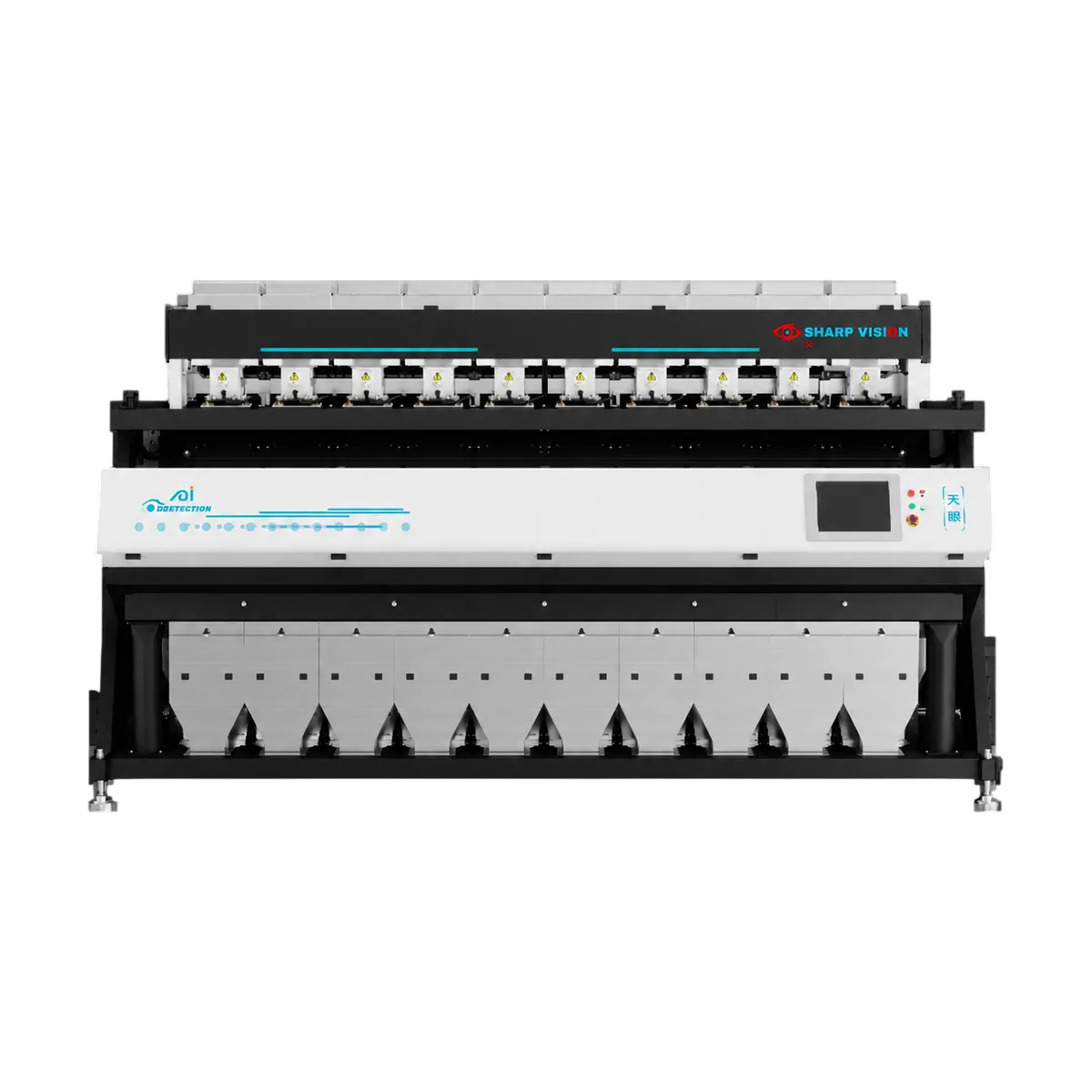
A chute is one channel that product slides down in front of the cameras. More chutes means more capacity. Sorters are commonly sold in multi-chute configurations, and the right number depends on your capacity and product. Tell your supplier your capacity and product and ask them to recommend the chute configuration.
4. Cameras and AI
Basic sorters compare each grain to a colour threshold. AI-based sorters, like the Sharp Vision color sorter supplied by Sharma Engineering, learn the difference between good and defective product, which helps with subtle defects such as light discolouration, partial damage or shape problems.
Ask the supplier to show you sorted samples of your own product, not just a demo video.
5. Plan the compressed air supply
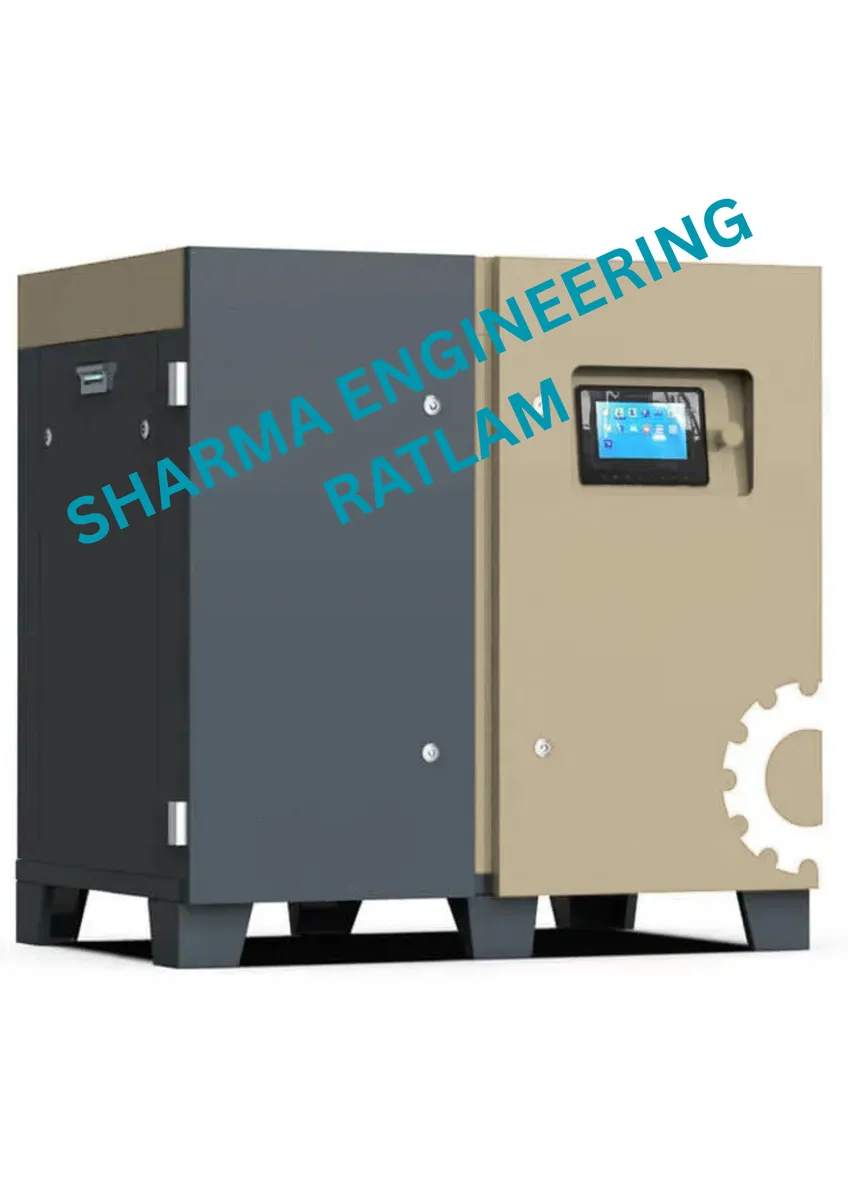
A color sorter removes defects with jets of compressed air, so it needs a steady supply of clean, dry air. That means a correctly sized screw air compressor, an air tank and a dryer or filters. An undersized or wet air supply is one of the most common reasons for poor sorting results.
6. Clean the product before it reaches the sorter
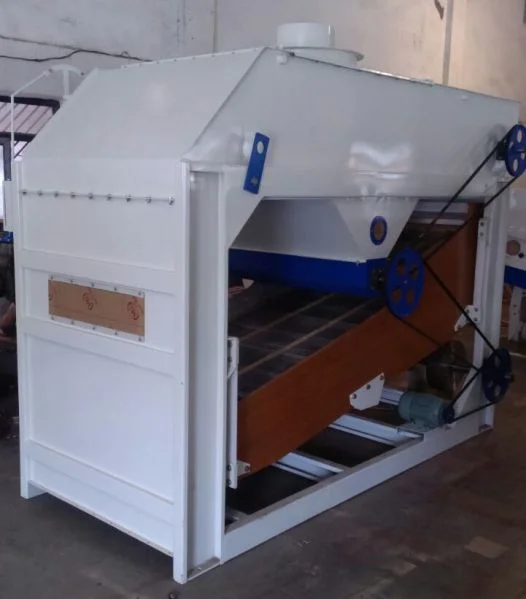
A color sorter performs best on product that has already been pre-cleaned and graded. In most mills the sequence is drum sieve → magnetic de-stoner → grader → color sorter. Removing stones, dust and size variation first protects the sorter and improves accuracy.
7. After-sales service and spare parts
A color sorter is a precision machine that runs every day. Choose a supplier who can install and commission it, train your operator, set the programs for your products and provide service and spare parts quickly. A cheaper machine with slow service often costs more in lost production.
Checklist: questions to ask before you buy
- ✓Can you sort my own sample and show me the accepted and rejected product?
- ✓What capacity will I get on my product at my required purity?
- ✓How many chutes do I need, and why?
- ✓Does the sorter use AI vision, and how many programs can it store?
- ✓What compressor, air tank and dryer do I need?
- ✓Who installs it, who trains my operator, and how fast is service?
- ✓Which spare parts should I keep in stock?
Frequently asked questions
What is the most important factor when choosing a color sorter?
+
Matching the machine to your product, required purity and hourly capacity. Test with your own sample before buying.
Can one color sorter sort both rice and dal?
+
Yes, if it supports multiple sorting programs. The program is changed for each product.
Why does a color sorter need a compressor?
+
Defects are blown out with short jets of compressed air from ejector valves, so the sorter needs a steady, clean, dry air supply from a screw air compressor.
Need help choosing?
Talk to Sharma Engineering, Ratlam – call +91 94253 55127 or send your requirement.